
May 11, 2026
What LEARNTEC taught us about the future of AI, LMS platforms and compliance learning

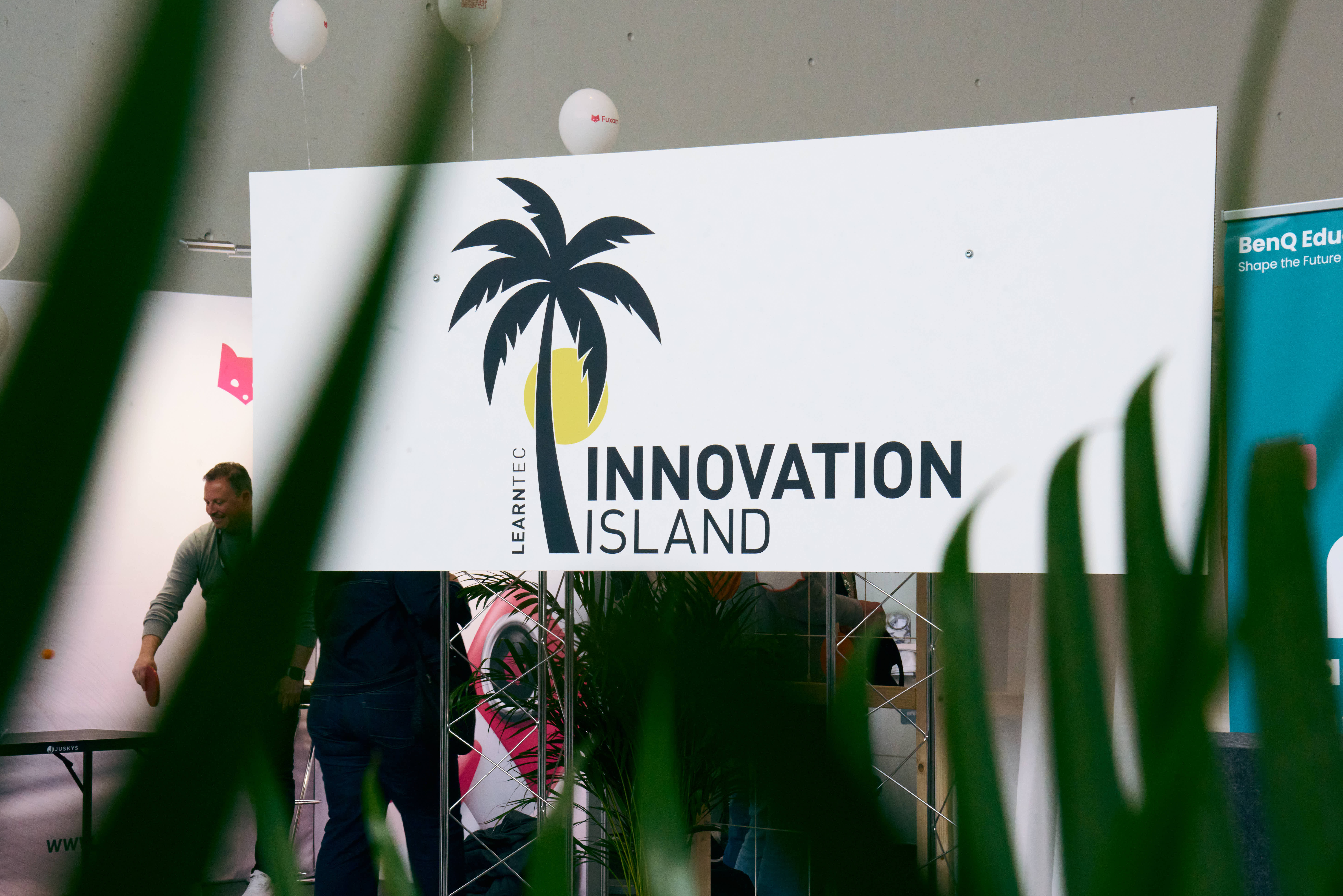
LEARNTEC 2026, one of Europe’s leading events for digital learning, took place from May 5 to 7, 2026, in Karlsruhe, Germany. The event brought together learning technology providers, LMS companies, HR and L&D professionals, educators, consultants, and organizations looking for smarter ways to make learning more effective, scalable, and relevant.
For us at ZUNO Games, LEARNTEC was not just an opportunity to see new tools and technologies. It was an opportunity to better understand a much bigger question:
What is really changing in learning technology - and what does that mean for the teams responsible for employee learning every day?
After three days of conversations with LMS providers, Moodle partners, compliance training companies, HR and L&D professionals, one conclusion became very clear:
AI is no longer the novelty. The real question is how we use it to keep learning useful, accurate, and connected to real business change.
One of the strongest impressions from LEARNTEC was just how present AI has become in the learning industry.
Almost every LMS, authoring tool, or learning provider now communicates some form of AI functionality:
AI for course creation.
AI for turning documents into lessons.
AI for generating quizzes.
AI for personalized recommendations.
AI for learner support.
AI for faster content production.
All of this can be useful for L&D teams, especially when there is a need to quickly transform large amounts of material into digital learning formats.
But that is exactly why AI is no longer a differentiator by itself.
For L&D teams, the more important question becomes:
Which specific problem does AI solve in our learning process?
If AI only helps teams create more content faster, but does not help ensure that this content remains relevant, accurate, and aligned with organizational change, then the problem is only being moved further down the line.
Teams may end up with more content, but not necessarily with a better learning system.

For a long time, one of the main challenges in digital learning was how to create enough content.
How do we digitize onboarding?
How do we create modules for employees?
How do we prepare quizzes faster?
How do we turn existing PowerPoint presentations, PDF documents, and internal materials into courses?
AI has made this part of the process much easier.
However, LEARNTEC made it clear that the next big challenge comes after content is created.
What happens to that content once it is published?
For L&D teams, this is especially important because learning libraries grow over time. New onboarding modules, compliance trainings, safety courses, product education, internal policies, employee academies, and partner trainings are continuously added.
But without a clear review system, that content can quickly become outdated.
That is why learning is increasingly moving from the question:
“How do we create more content?”
to the question:
“How do we know that the content we already have is still accurate, useful, and aligned?”
That is the essence of content governance in L&D.
Many organizations already have an LMS. They have courses. They have trainings. They have completion reports.
But that does not always mean they are truly covered.
If an internal policy changes, but the training still contains the old version of the rule, employees can complete the course and still learn the wrong information.
If regulatory requirements change, but compliance training is not updated, course completion does not necessarily mean real compliance.
If a procedure changes, but a quiz question still tests the old practice, the L&D team may have a formally completed training, but not a reliable learning outcome.
This is why L&D teams increasingly need to ask new questions:
These questions connect L&D, compliance, HR, legal, and operational teams.
In regulated industries, they are not just technical questions. They are business risk questions.
Another important takeaway from our conversations with HR and L&D professionals is that many organizations are not ready for advanced AI automation before they solve the basic issue of visibility.
In practice, learning content often does not live only inside the LMS.
It can be spread across SCORM packages, PDF documents, SharePoint folders, internal policies, emails, presentations, old file versions, and different team members’ personal folders.
That means the first challenge is often not:
“How can AI automatically update this course?”
The first challenge is:
“Where is the latest version of our content, and what is it connected to?”
For L&D teams, this means that the next phase of digital learning will require more structure:
clearer content mapping,
clearer ownership,
better links between courses and internal policies,
more regular reviews,
and stronger collaboration with compliance and business teams.
AI can help, but only if the organization knows what it wants to track.
One of the most important shifts we noticed at LEARNTEC is that the role of the LMS is changing.
An LMS is no longer just the place where employees “watch a course” and click complete.
For many organizations, the LMS is becoming a central system for:
onboarding,
compliance training,
product education,
internal academies,
partner training,
certifications,
knowledge tracking,
and proving that employees have completed important training.
This means that L&D teams are no longer only creators and distributors of learning content.
They are increasingly becoming owners of learning infrastructure that affects work quality, compliance, productivity, and organizational resilience.
Because of that, L&D teams will increasingly need to understand not only pedagogy and engagement, but also data, systems, processes, security, and governance.
Although AI was one of the central topics of the conference, one conclusion remained very clear: in serious learning and compliance processes, AI cannot be fully autonomous.
Especially when we talk about regulated industries, internal policies, legal requirements, safety, or employee training, human review remains essential.
AI can help identify a potential issue.
AI can suggest a change.
AI can speed up analysis.
AI can connect content.
AI can point to risk.
But a human expert still needs to approve the decision.
For L&D teams, this means that the future is not about AI “taking over” learning processes. It is about making those processes easier to manage.
The greatest value of AI will be in helping teams see what needs their attention faster.
If we translate the key takeaways from LEARNTEC into practical questions for L&D teams, these are the ones every organization can start asking today:
1. Do we know which learning materials are most critical?
Not all courses carry the same level of risk. Compliance, safety, onboarding, and procedural training usually carry higher consequences if they become outdated.
2. Do we know who owns each piece of content?
Without clear ownership, content review often becomes someone’s “side responsibility.”
3. Do we have a defined review rhythm?
Some content can be reviewed annually, but some materials need to be connected to regulatory, policy, or process changes.
4. Are our courses connected to policies and procedures?
If a policy changes, the team needs to know which courses are affected.
5. Do we keep an update trail?
In compliance learning, it is not enough for content to be updated. Teams also need to know when it changed, why it changed, and who approved it.
6. Are we using AI for the right problem?
AI is not a strategy by itself. It should support a specific learning, business, or compliance goal.
For ZUNO Games, LEARNTEC was an important space for learning, conversations, and validation of where the learning technology market is heading.
Our perspective comes from experience in building gamified learning solutions, digital trainings, and tools that help organizations make complex topics easier to understand through interactive and measurable learning.
That is why it was important for us to look beyond the general AI trend and understand what is really changing in how organizations manage learning.
Our conclusion is that the future will not belong only to the tools that create content the fastest.
It will belong to solutions that help organizations build trust in their learning systems.
In that context, we are also developing DELCAT — an AI compliance layer exploring how LMS administrators, L&D teams, and compliance teams can more easily identify which existing training materials may be affected by changes in regulations, policies, or procedures.
But the broader lesson from LEARNTEC is not only about one product. The broader lesson is that learning content can no longer be static. It needs to be alive, connected to business change, and transparent enough for organizations to trust it.
If DELCAT sounds relevant to your team, reach out to us — we would love to hear about your challenges and explore how we can support you.

LEARNTEC 2026 showed us that learning technology is entering a new phase.
The first phase was the digitalization of learning.
The second phase was scaling content through LMS platforms.
The third phase, which we are now entering, is focused on AI, governance, accuracy, and maintaining knowledge over time.
For L&D teams, this means their role will become even more important.
They will not only create and deliver training. They will help ensure that organizational knowledge remains relevant, accurate, and connected to real change.
Our biggest takeaway from LEARNTEC is simple: AI in learning should not only help organizations create more content. It should help them trust the content they already have.
ZUNO Games’ participation at LEARNTEC and activities related to the development and validation of new learning technology solutions were supported by the Innovation Fund of Montenegro, within the support programme for micro and small enterprises.
This support enables us to continue exploring how artificial intelligence, digital learning, and compliance processes can help organizations build more modern, secure, and sustainable knowledge systems.